
- All
- Product Name
- Product Keyword
- Product Model
- Product Summary
- Product Description
- Multi Field Search
Author: Site Editor Publish Time: 2025-12-23 Origin: Site
Blackout Roller Shades: Fabric Composition, Thickness & Light Blocking Rate Explained
For B2B buyers sourcing blackout roller shades—whether wholesalers supplying commercial projects, project purchasers for hotels and offices, or interior designers curating functional spaces—fabric-related parameters are the cornerstone of successful procurement. Choosing the wrong fabric composition, ignoring thickness requirements, or misjudging light blocking rate can lead to costly consequences: end-user complaints about light leakage, premature fabric wear in high-traffic areas, or failure to meet regional compliance standards. According to a 2025 report by the Window Covering Association of America (WCAA), 58% of B2B blackout shade sourcing disputes stem from mismatched fabric specifications. This guide delves into the critical relationship between fabric composition, thickness, and light blocking rate of blackout roller shades, providing actionable insights to help B2B buyers make informed bulk purchasing decisions.
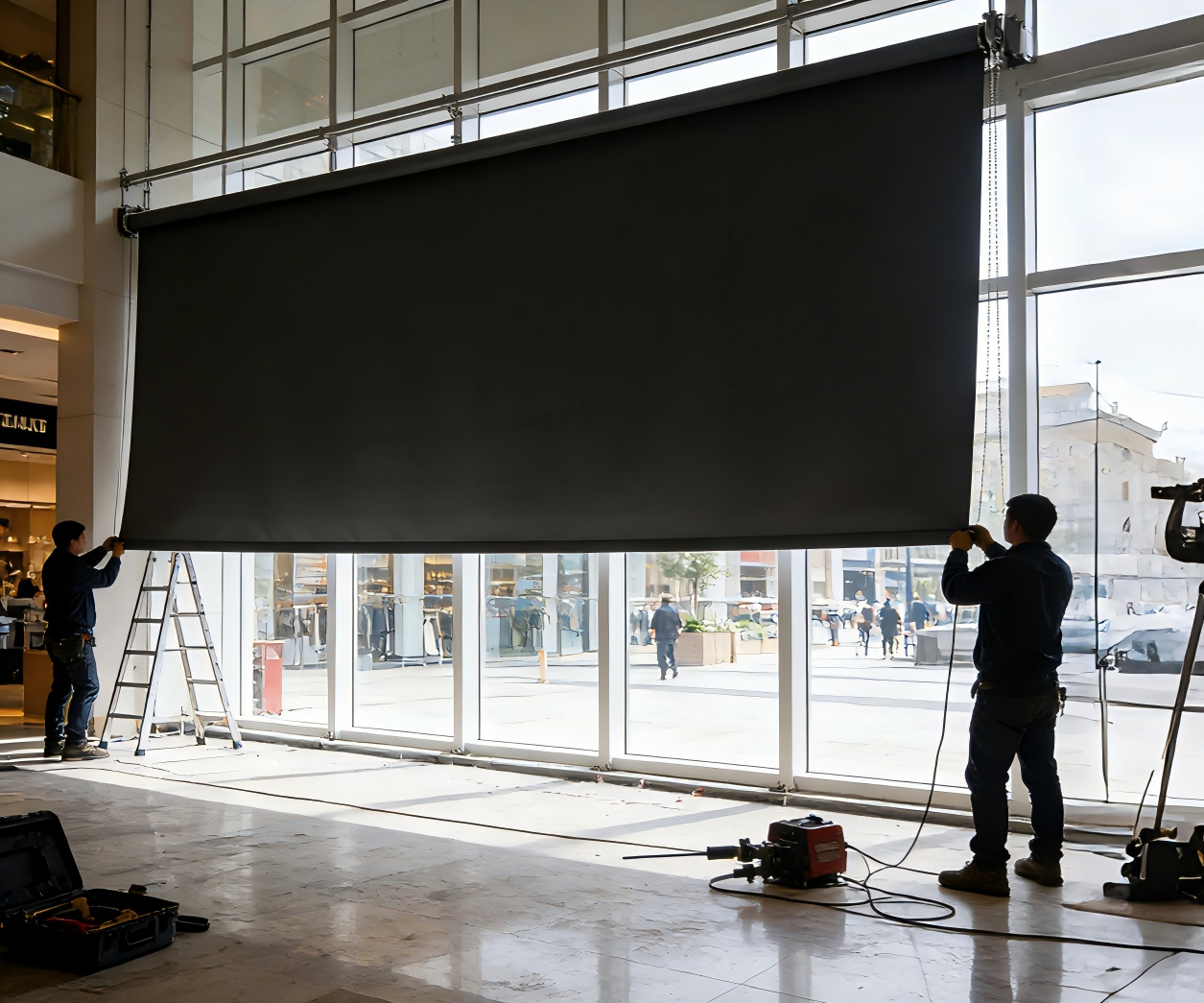
A Deep Dive into Blackout Roller Shade Fabric Compositions: Pros, Cons & B2B Applications
The fabric composition of blackout roller shades directly determines their durability, light blocking effectiveness, compliance eligibility, and cost. For B2B bulk procurement, understanding the characteristics of different fabric types is essential to match products with project requirements. Below are the three most common fabric compositions for commercial blackout roller shades:
1.1 PVC-Coated Polyester Fabric
PVC-coated polyester is the most widely used fabric for blackout roller shades in commercial scenarios, consisting of a polyester base cloth coated with a high-density PVC layer.
• Core Advantages: Offers excellent light blocking performance (easily reaching ≥99%), superior water resistance, and high wear resistance (suitable for 10,000+ opening and closing cycles). It is cost-effective, making it ideal for large-scale commercial projects with tight budgets, such as office buildings and retail stores.
• Limitations: PVC materials may contain harmful substances (e.g., phthalates) that fail to meet EU REACH regulations. It is not environmentally friendly, which may be a concern for clients prioritizing ESG goals.
• B2B Application Scenarios: Budget-friendly commercial projects, indoor spaces with high humidity (e.g., shopping mall restrooms), and projects in regions with loose environmental regulations.
1.2 Non-PVC Coated Fabric (Polyurethane Coating)
As a eco-friendly alternative to PVC, non-PVC coated fabric uses polyurethane (PU) coating on a polyester or cotton-polyester blend base cloth.
• Core Advantages: Complies with global environmental standards (REACH, GREENGUARD Gold), contains no harmful substances, and has similar light blocking performance to PVC-coated fabric (≥99%). It is lightweight yet durable, suitable for high-end commercial spaces.
• Limitations: 15-20% higher cost than PVC-coated fabric, which may increase bulk procurement expenses.
• B2B Application Scenarios: High-end hotels, hospitals, educational institutions, and projects in the EU, US, and other regions with strict environmental regulations.
1.3 Recycled Fabric Blends
Made from recycled polyester (rPET) or recycled cotton, combined with a blackout coating, this fabric type aligns with the global sustainable development trend.
• Core Advantages: Reduces carbon footprint, meets ESG requirements of corporate clients, and has a light blocking rate of ≥98%. It enhances brand image for B2B buyers supplying eco-conscious clients.
• Limitations: Higher production costs, and the supply chain is relatively narrow, requiring manufacturers with specialized recycling technology.
• B2B Application Scenarios: Green building projects, eco-friendly hotels, and corporate offices with strict ESG policies.
Fabric Thickness: How It Impacts Durability & Light Blocking Performance
Fabric thickness, typically measured in grams per square meter (g/㎡), is another critical parameter for blackout roller shades. For B2B bulk procurement, thickness selection must balance durability, light blocking effect, and installation feasibility.
2.1 Standard Thickness Ranges & Corresponding Applications
• 250-300 g/㎡ (Lightweight): Suitable for low-traffic commercial spaces with basic light blocking needs, such as small office cubicles and storage rooms. It is easy to install and cost-effective but has limited durability (6,000-8,000 opening cycles).
• 300-400 g/㎡ (Medium-Weight): The most versatile option for general commercial projects, including mid-range hotels, retail stores, and conference rooms. It offers a balance of light blocking (≥99%), durability (10,000+ opening cycles), and cost. This is the preferred thickness for most B2B bulk orders.
• 400+ g/㎡ (Heavy-Duty): Designed for high-traffic, high-wear environments, such as airport lounges, stadiums, and hospital operating rooms. It provides superior light blocking (≥99.5%) and durability (15,000+ opening cycles) but requires more robust roller mechanisms and higher procurement costs.
2.2 Key Considerations for B2B Bulk Procurement
When selecting fabric thickness for bulk orders, B2B buyers should consider three factors:
• Usage Frequency: High-traffic areas require thicker fabrics to avoid frequent replacements. For example, a busy hotel lobby with 50+ daily shade operations needs 400+ g/㎡ fabric.
• Installation Environment: Outdoor-facing windows or areas with extreme temperature changes (e.g., unheated warehouses) benefit from thicker fabrics with better thermal insulation and UV resistance.
• Mechanism Compatibility: Thicker fabrics require roller tubes with larger diameters (≥38mm) to ensure smooth operation. Confirm with manufacturers that their roller mechanisms are compatible with the selected thickness.
Light Blocking Rate: Standards, Testing & Selection Criteria for Commercial Projects
Light blocking rate—the percentage of light blocked by the fabric—is the core functional parameter of blackout roller shades. For B2B buyers, understanding light blocking rate standards and testing methods is crucial to avoid "false blackout" products.
3.1 Global Light Blocking Rate Standards
• EN 14411 (EU Standard): Classifies blackout fabrics into three levels: Class 1 (95-97% light blocking), Class 2 (97-99% light blocking), and Class 3 (≥99% light blocking). Commercial projects in the EU require at least Class 2 for general spaces and Class 3 for specialized areas like projection rooms.
• ANSI/HCMA 8.1 (US Standard): Defines "blackout" as ≥99% light blocking rate. Products sold in the US must meet this standard to be labeled as blackout shades.
• GB/T 24264 (China Standard): Requires blackout fabrics for commercial use to have a light blocking rate of ≥98%.
3.2 How to Verify Light Blocking Rate in Bulk Procurement
To ensure product quality, B2B buyers should take the following steps to verify light blocking rate before placing large orders:
• Request Certification Documents: Ask manufacturers to provide third-party test reports (e.g., SGS, Intertek) confirming the light blocking rate of the fabric.
• Sample Testing: Order 3-5 fabric samples and conduct simple tests: place the sample over a bright light source (e.g., a 100W bulb) and check for light penetration. For precise measurements, use a light transmittance meter.
• On-Site Inspection: For large-scale projects (e.g., 1,000+ sets), arrange on-site inspection of the production line to ensure consistent light blocking performance across batches.
3.3 Matching Light Blocking Rate to Commercial Scenarios
• 98-99% Light Blocking: Suitable for general commercial spaces like open-plan offices, retail fitting rooms, and hotel lobbies, where partial light filtration is acceptable.
• ≥99% Light Blocking: Required for spaces needing complete darkness, such as conference rooms with projection equipment, hotel bedrooms, and hospital recovery areas.
• ≥99.5% Light Blocking: Reserved for specialized spaces like operating rooms, cinemas, and data centers, where even minimal light leakage can affect operations.
B2B Bulk Procurement Guide: Selecting the Right Blackout Roller Shade Fabric
Based on 20+ years of experience supplying blackout roller shades to global B2B clients, we’ve summarized a 4-step framework to help buyers select the optimal fabric:
Step 1: Define Project Requirements
Clarify the project’s core needs: light blocking rate standards, usage frequency, environmental conditions, and compliance requirements (e.g., REACH for EU projects, GREENGUARD for US projects).
Step 2: Balance Cost & Performance
For budget-sensitive projects, PVC-coated polyester (300-350 g/㎡) is a practical choice. For high-end or eco-friendly projects, opt for non-PVC or recycled fabric blends, even if they cost 15-20% more—this can enhance client satisfaction and reduce long-term replacement costs.
Step 3: Verify Manufacturer Capabilities
Choose manufacturers with specialized production capacity for your selected fabric type. Ask for:
• Compliance certificates (REACH, GREENGUARD, ISO 9001);
• Bulk production lead time (ideally 25-35 days);
• Sample availability (free fabric samples should be provided within 7 days).
Step 4: Negotiate Flexible Terms
For long-term partnerships, negotiate MOQ (Minimum Order Quantity) flexibility—reputable manufacturers can adjust MOQ for regular clients. Inquire about volume discounts for large orders (e.g., 5% discount for orders over 5,000 sets).
Success Case: Bulk Supply of Non-PVC Blackout Roller Shades for European Hotel Chain
In 2025, we supplied 2,800 sets of blackout roller shades to a European hotel chain with 12 locations across Spain and Italy. The client required:
• Non-PVC fabric compliant with REACH regulations;
• Fabric thickness of 350 g/㎡ (medium-weight) for durability;
• Light blocking rate of ≥99% for hotel bedrooms.
We recommended a PU-coated recycled polyester blend fabric, which met the client’s environmental requirements while ensuring superior light blocking and durability. We provided free fabric samples within 5 days and completed bulk delivery in 30 days. Post-installation, the client reported zero light leakage complaints, and the fabric’s wear resistance exceeded their expectations—they renewed their partnership for 2026 with an additional 1,500-set order.
Conclusion
Selecting the right fabric for blackout roller shades—considering composition, thickness, and light blocking rate—is a critical step for B2B bulk procurement success. PVC-coated polyester offers cost-effectiveness for budget projects, non-PVC fabrics meet strict environmental standards, and recycled blends align with ESG goals. Fabric thickness should be matched to usage frequency and environment, while light blocking rate must comply with regional standards and project needs. As a B2B manufacturer with 20+ years of experience, we provide OEM/ODM customization for all fabric types, hold global compliance certifications (REACH, GREENGUARD, CE), and offer flexible MOQ and lead time solutions. Contact our sales team today to request free fabric samples and a tailored bulk quote—let us help you select the perfect blackout roller shade fabric for your commercial projects.


