
- All
- Product Name
- Product Keyword
- Product Model
- Product Summary
- Product Description
- Multi Field Search
Author: Site Editor Publish Time: 2025-12-14 Origin: Site
How to Choose Blackout Roller Shades vs. Zebra Shades for Commercial Projects(2026 Guide)
Selecting the right window shades for commercial projects—whether it’s an office building, hotel, retail store, or educational institution—can be a make-or-break decision for B2B buyers. Choosing incorrectly between blackout roller shades and zebra shades often leads to costly issues: light leakage complaints from end-users, insufficient durability for high-traffic areas, or failure to meet project compliance standards. According to a 2025 industry report by Grand View Research, 62% of B2B commercial window treatment buyers cite “product-scene mismatch” as their top sourcing pain point. This 2026 guide is tailored to help wholesalers, project purchasers, and interior designers navigate the selection process, comparing blackout roller shades and zebra shades from technical parameters, scene adaptation, and bulk procurement perspectives to ensure optimal purchasing decisions.
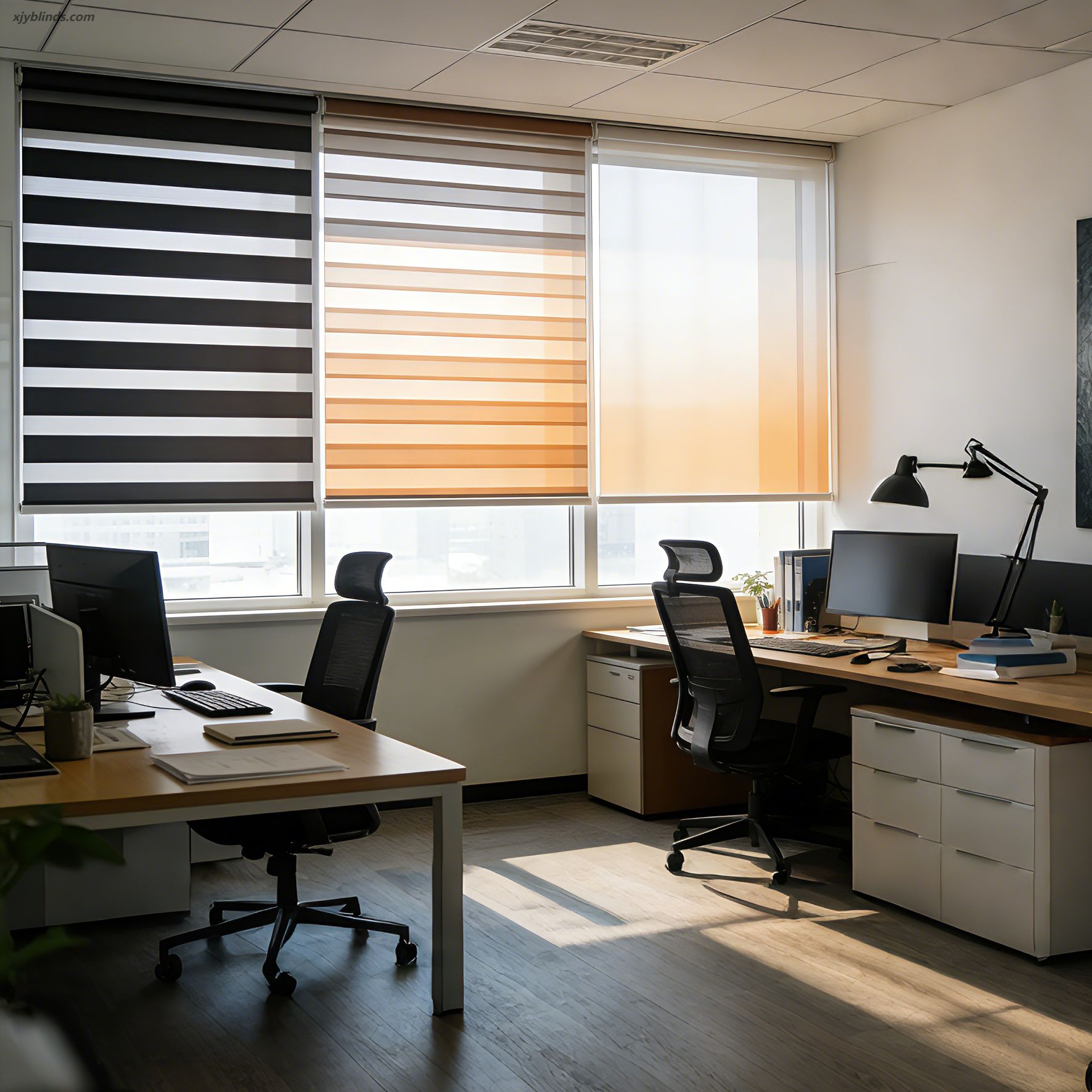
Core Differences Between Blackout Roller Shades and Zebra Shades for Commercial Use
To make an informed choice, B2B buyers must first grasp the fundamental distinctions between the two products, especially in terms of functionality, structure, and commercial application value. Below is a detailed comparison of their core attributes:
1.1 Functionality: Light Control Precision & Usage Scenarios
• Blackout Roller Shades: As the name suggests, their primary function is 100% light blocking. Equipped with a high-density blackout coating (PVC or non-PVC), they can achieve a light blocking rate of ≥99%, effectively preventing UV rays, glare, and external light penetration. This makes them ideal for spaces requiring complete darkness, such as conference rooms, projection rooms, hotel bedrooms, and hospital recovery areas.
• Zebra Shades: Feature a dual-layer design with alternating opaque and sheer fabric strips. By adjusting the position of the strips, they offer three light control modes: full blackout (opaque strips aligned), partial light filtering (strips overlapping), and full transparency (sheer strips aligned). This versatility suits spaces needing flexible light adjustment, such as office workstations, retail storefronts, and hotel lobbies.
1.2 Structural Durability & Maintenance Requirements
• Blackout Roller Shades: Boast a simple, robust structure with a single roller tube and fabric. The mechanism is designed for 10,000+ opening and closing cycles, making it resistant to wear and tear in high-traffic commercial environments. Maintenance is minimal—only regular dusting and occasional fabric cleaning are needed.
• Zebra Shades: Have a more complex dual-layer fabric structure and a precision-adjusting mechanism. While modern designs ensure durability (8,000+ opening/closing cycles), the overlapping fabric strips require more careful maintenance to avoid tangling. They are better suited for medium-traffic areas with moderate usage frequency.
Technical Parameters for Bulk Procurement: Key Standards to Ensure Project Quality
For B2B bulk procurement, technical parameters directly determine product quality, project compliance, and long-term usage costs. Below are the mandatory technical standards for both shade types in commercial projects:
2.1 Critical Parameters for Blackout Roller Shades
• Light Blocking Rate: Must reach ≥99% for commercial spaces (tested per EN 14411 standard). For specialized areas like projection rooms or hospital operating rooms, a rate of ≥99.5% is recommended.
• Fabric Specifications: Fabric weight should be ≥300g/㎡ to ensure durability and blackout effectiveness. Sustainable options (e.g., 90% recycled polyester + 10% linen) are preferred, aligning with global ESG trends. Non-PVC coatings are mandatory for projects in the EU (compliant with REACH regulations).
• Mechanism Quality: The roller tube should be made of aluminum alloy (thickness ≥1.2mm) to prevent deformation under bulk installation. Spring mechanisms must pass fatigue testing (10,000+ cycles) to ensure smooth operation.
2.2 Critical Parameters for Zebra Shades
• Fabric Compatibility: Both opaque and sheer layers must be made of flame-retardant fabric (compliant with EN 13773 standard for commercial use). The sheer layer should have a weave density of ≥180g/㎡ to balance light filtration and privacy protection.
• Adjustment Precision: The mechanism should allow strip alignment accuracy within ±2mm to avoid light leakage when in full blackout mode. Motorized versions (for large commercial spaces) must be compatible with smart building systems (e.g., BMS integration).
• Size Tolerance: For bulk orders, size deviation should be ≤±1cm to ensure consistent installation across multiple windows in the same project.
5-Step Decision Framework for B2B Buyers: Match Products to Commercial Scenarios
To avoid mismatches, B2B buyers should follow this structured 5-step framework to select the right shade type for their specific commercial project:
Step 1: Define Core Functional Requirements
Start by clarifying the project’s primary light control needs: Do you require complete blackout (e.g., hotel bedrooms) or flexible light adjustment (e.g., open-plan offices)? For spaces with both needs (e.g., hotel suites), consider a combination of blackout roller shades and sheer curtains, or opt for zebra shades as an all-in-one solution.
Step 2: Assess Usage Environment & Traffic Volume
High-traffic areas (e.g., retail store entrances, office corridors) demand maximum durability—blackout roller shades are preferred here due to their simple, wear-resistant structure. Medium-traffic areas (e.g., hotel lobbies, meeting rooms) can benefit from the versatility of zebra shades.
Step 3: Verify Compliance & Certification Requirements
Check regional regulations: EU projects require CE certification and REACH compliance (ban on harmful substances); US projects need GREENGUARD certification for low VOC emissions. Ensure your manufacturer can provide certification documents for each bulk order.
Step 4: Evaluate Bulk Procurement Flexibility
Confirm the manufacturer’s MOQ (Minimum Order Quantity) flexibility—reputable B2B manufacturers offer MOQ adjustments for long-term partnerships. Inquire about lead times (ideally 25-35 days for bulk orders) and sample availability (free fabric samples should be provided for quality verification).
Step 5: Calculate Total Ownership Cost
Beyond the initial procurement cost, factor in maintenance and replacement costs. Blackout roller shades have lower long-term costs due to their durability; zebra shades may require more frequent mechanism maintenance in high-traffic areas.
Common Selection Mistakes to Avoid in Commercial Projects
Based on our 20+ years of B2B window treatment experience, we’ve identified three critical mistakes that lead to project delays or complaints:
• Mistake 1: Ignoring Scene-Specific Light Needs: Choosing zebra shades for spaces requiring complete blackout (e.g., projection rooms) leads to light leakage complaints. Always test light blocking performance against the project’s actual needs.
• Mistake 2: Sacrificing Quality for Low Cost: Opting for low-grade fabrics (≤250g/㎡) to reduce procurement costs results in premature wear—we’ve seen cases where cheap blackout roller shades failed after 6 months of high-traffic use, leading to costly replacements.
• Mistake 3: Overlooking Compliance Certifications: Non-compliant products (e.g., PVC-coated shades in EU projects) can be seized at customs, causing project delays. Always verify certification documents before placing bulk orders.
Success Case: Bulk Shade Supply for European Office Chain
In 2025, we supplied 3,800 sets of window shades to a European office chain with 15 locations across Germany and France. The client needed different solutions for various spaces: blackout roller shades for conference rooms and zebra shades for open workstations. We provided:
• Custom-sized blackout roller shades (light blocking rate 99.2%) with non-PVC coatings, compliant with REACH and CE standards.
• Motorized zebra shades with BMS integration, allowing centralized light control across all office locations.
• Sample verification within 7 days, bulk delivery in 30 days, and on-site installation guidance.
Post-installation, the client reported a 40% reduction in glare-related complaints and praised the products’ durability. They renewed their partnership for 2026, with an additional 2,500-set order for new office locations.
Conclusion
Choosing between blackout roller shades and zebra shades for commercial projects boils down to matching functionality, technical parameters, and compliance requirements to the project’s specific needs. Blackout roller shades excel in high-traffic spaces requiring complete darkness and durability, while zebra shades offer versatility for spaces needing flexible light control. As a B2B manufacturer with 20+ years of experience, we provide OEM/ODM customization, global compliance certifications (CE, GREENGUARD, REACH), and flexible MOQ solutions to support commercial projects worldwide. Contact our sales team today to request free fabric samples and a tailored bulk procurement quote—let us help you avoid sourcing pitfalls and deliver high-quality window solutions for your clients.


